

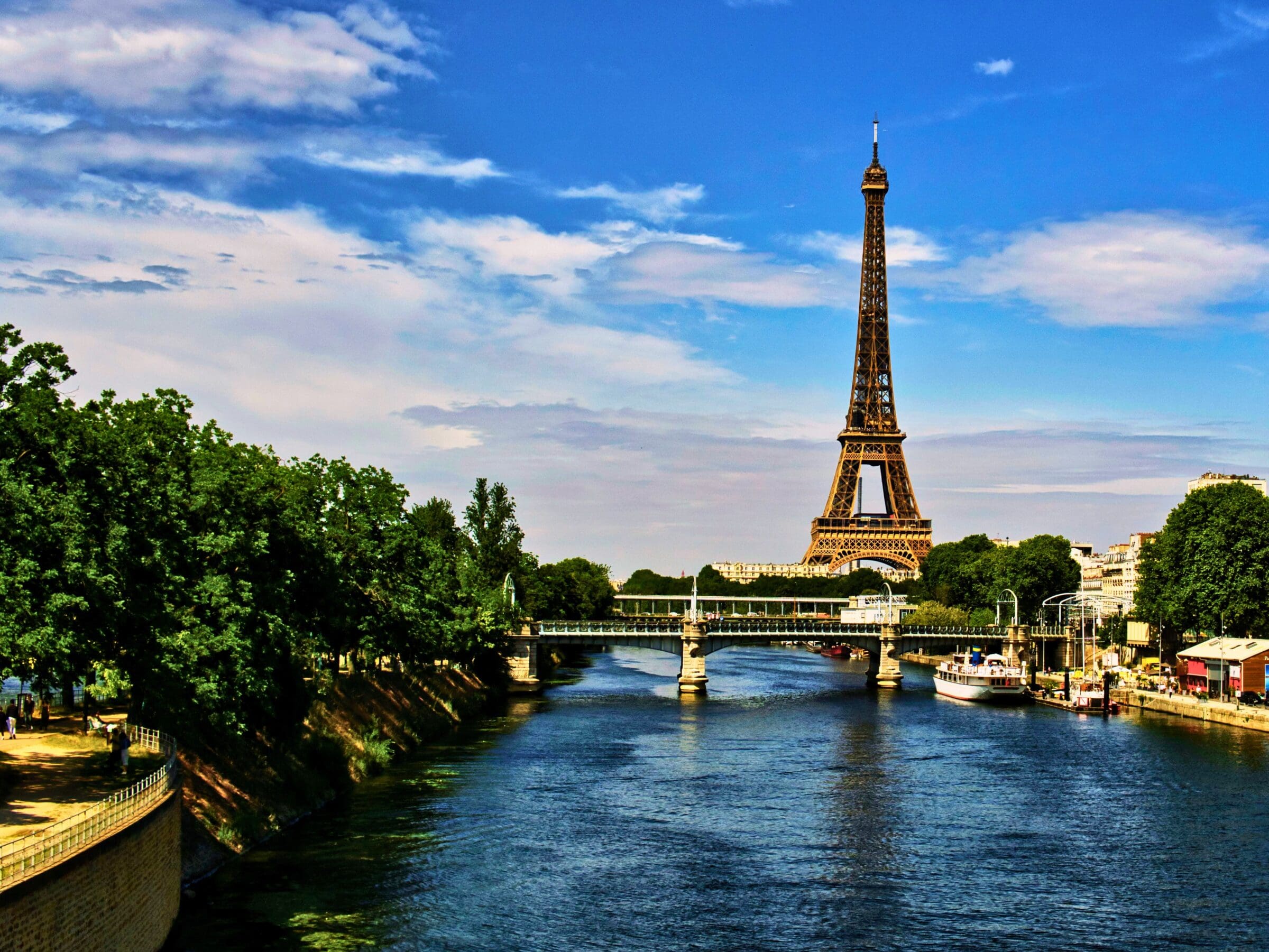
Stop Doing France Like a Checklist: Paris, Normandy, and the Seine
A river-paced way to experience Paris, Giverny, Rouen, and Normandy through the landscapes that inspired Impressionism.
Paris is not a city meant to be conquered before lunch.
She’s too moody for that. Too layered, too poetic, and way too full of tiny sensory interruptions. The café chair that somehow makes you sit differently, the pastry case that turns a simple breakfast into a moral dilemma, the museum room that asks you to be quiet for reasons beyond manners, the street corner that looks ordinary until the light hits it just right.
And yet, we keep trying to turn France, and honestly most of Europe, into a checklist.
I was reminded of this recently when my 20-something nephew started planning his first solo trip to Paris. He has four full days, plus departure day, and was already trying to squeeze in two separate day trips: climbing in Fontainebleau and visiting the aeronautical museum. Not bad ideas at all. Actually, very cool and very him. But I had to lovingly reorient my opposite-of-little pumpkin to the reality of travel days: the getting there, the getting back, the waiting, the navigating, the meals that become snacks, and the mental energy spent figuring things out in a new place.
Because at some point, if you keep slicing the trip into side quests, you don’t come home remembering Paris. You remember logistics with a few Parisian scenes attached.
I say that with affection because I have absolutely done the “we came all this way, so we need to see everything” routine. Our first trip to Italy had all the big-ticket stops: cathedrals, the Trevi Fountain, the Spanish Steps, the Colosseum, and every associated attraction we could wedge into our Roman schedule. It was gorgeous, of course. But it was also crowded, hot, and nonstop in a way that made me deeply grateful I had planned slower days on the Amalfi Coast afterward. Those days gave us room to recover from the pace we had created.
That was the lesson: rest days should not have to rescue the trip. The trip itself should be designed with enough space to breathe.
That is what I like to call the Seine Shift: the moment France stops feeling like a list of separate places to manage and starts feeling like one connected story unfolding from the river. And when the story includes Paris, Monet’s gardens at Giverny, the Gothic beauty of Rouen, the river villages of Normandy, La Roche-Guyon, Le Havre, and the very landscapes that helped give birth to Impressionism, that shift matters.
Because Impressionism was never about rushing through a scene. It was about noticing what changed when you stayed with it long enough.
France Is Not a Tourist Scavenger Hunt
There is nothing wrong with wanting to see the iconic places. Paris, Giverny, Rouen, and Normandy are bucket-list destinations for good reason. They hold beauty, history, art, architecture, food, and atmosphere in ways that make people cross oceans to experience them. The desire is not the issue. The pacing is.
A traditional land trip through Northern France can look lovely when you are building it from your laptop. A few nights in Paris, a day trip to Giverny, maybe Rouen if the timing works, a long excursion toward the Normandy coast, then perhaps another hotel if you want to be “efficient.” It all seems reasonable until the trip starts asking you to move before you have absorbed where you are. The suitcase comes out again, the hotel lobby becomes familiar in an annoying way, and the day’s beauty gets filtered through the question of what has to happen next.
That is how travel gets flattened. Not ruined, necessarily, because France is still going to be France. But flattened. The city becomes a stop. Those gardens become a photo. That cathedral becomes a backdrop. The meal becomes something you squeeze in before the next reservation. Sure, you did the thing, but did you let the thing do anything to you?
I’m a huge believer in doing the thing in the place. Taste the cider where the apples grow. Look at the light where Monet studied the light. Walk the medieval streets slowly enough to feel their age. Let Paris be more than a beautiful backdrop for an overpacked schedule. That is where travel starts to become an actual memory instead of just photographic proof.
If your dream of seeing Normandy involves packing a damp suitcase at 6:00 a.m., sitting on a tour bus for hours, and spending half the day watching France blur past a highway window, by all means, keep planning that land itinerary. But if that sentence made your soul leave your body just a little, there is a more civilized way to do this. Let me show you the way.
The Geometry of the Seine
Back in my science teacher days, we talked about how water always finds the path of least resistance. It carves, shapes, softens, and moves with quiet intelligence. Travelers, for reasons I still do not fully comprehend, often do the exact opposite. We build itineraries with maximum resistance, then act surprised when we come home needing recovery time from the vacation we were so excited to take.
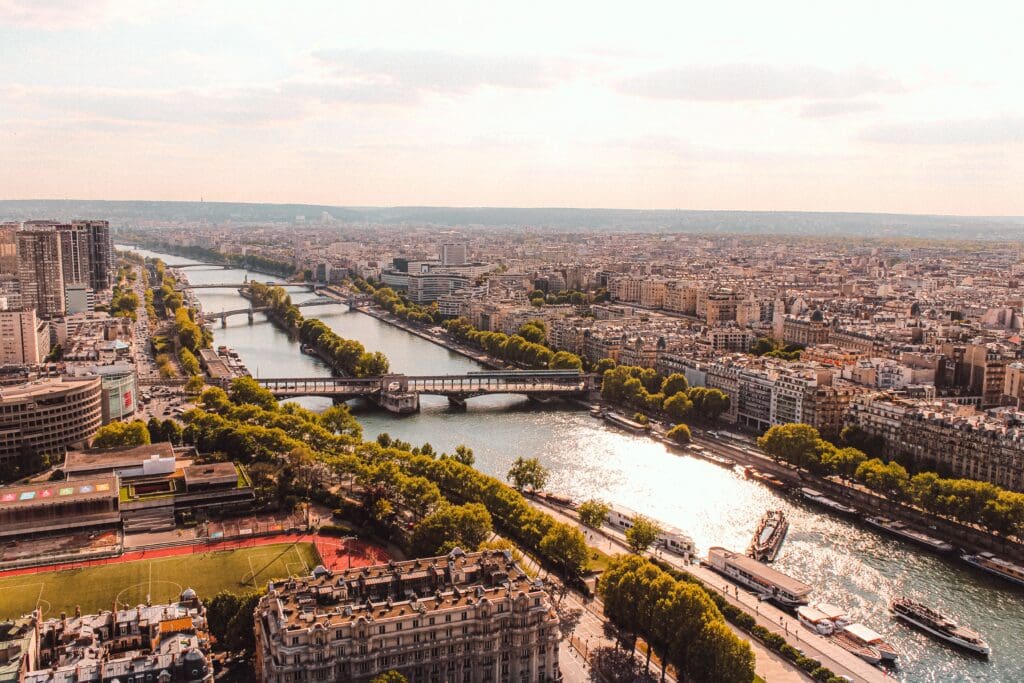
When you look at Northern France through the lens of geography, the Seine is not just pretty water running through a famous city. It is the spine of the region, connecting Paris to Normandy through a landscape shaped by medieval towns, chalk cliffs, gardens, ports, river bends, and centuries of cultural movement. Commerce, art, food, war, architecture, and daily life have all moved along this river. Traveling by Seine is not a gimmick. It is a way of aligning the trip with the natural logic of the place.
That is why the river changes the emotional frame of the journey. A hotel-based trip often makes each destination feel separate. Paris is one chapter, Giverny another, Rouen another, Normandy another. A river journey connects them, not by forcing you to move faster, but by letting the landscape reveal itself in sequence.
There is also something wonderfully nerdy and satisfying about river navigation itself. The locks, for example, work like mini versions of the Panama Canal. The ship enters, the water level adjusts, and you move smoothly from one elevation to another. It is controlled, quiet, and strangely soothing to watch. That little engineering moment captures the whole philosophy of river travel: instead of forcing your way through France, you let the journey rise and settle with the landscape.
This is the kind of intentional cruise curation that changes how a trip feels before you ever pack a bag.
Paris as the Opening Note, Not the Whole Assignment
Most travelers place too much pressure on Paris. They want it to be romantic, decadent, stylish, cultural, efficient, meaningful, and somehow restful, all within a few packed days. That is a heavy job for one city, even one as theatrical as Paris.
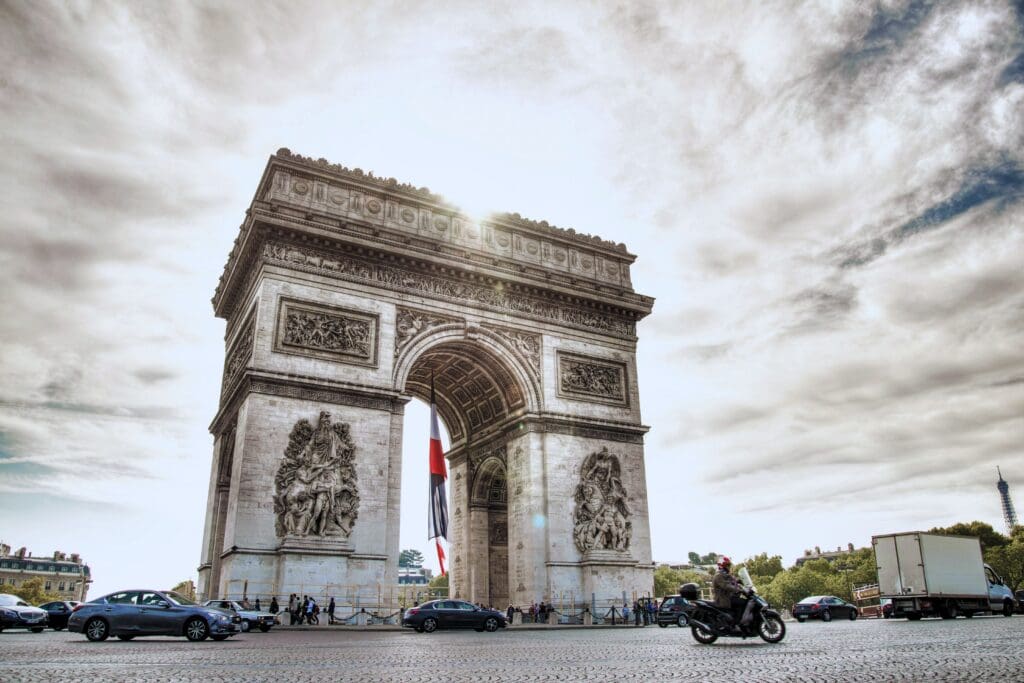
A Seine river cruise reframes Paris beautifully because it allows the city to be the opening note of a larger composition. Paris still matters, of course. She is the doorway. She sets the tone with her architecture, museums, food, fashion, riverbanks, and that unmistakable sense of being both elegant and slightly unimpressed with your plans. But she does not have to carry the whole trip by herself.
From Paris, the river begins to widen the story. The intensity of the capital gives way to softer landscapes, medieval streets, gardens, villages, and the countryside that shaped the eye of the Impressionists. You begin to understand France not as a cluster of famous sites, but as a connected sensory experience. The lighting, pace, food, and architecture all change. And because you are not constantly checking out of one place and into another, you have the mental space to notice the transition.
That is the part that feels most luxurious to me. Not just that your room travels with you, although we will absolutely discuss the blessing of not dragging luggage through France. The deeper luxury is perspective. You are not just moving from attraction to attraction. You are watching France explain herself from the riverbanks.
Giverny and the Impressionist Rhythm
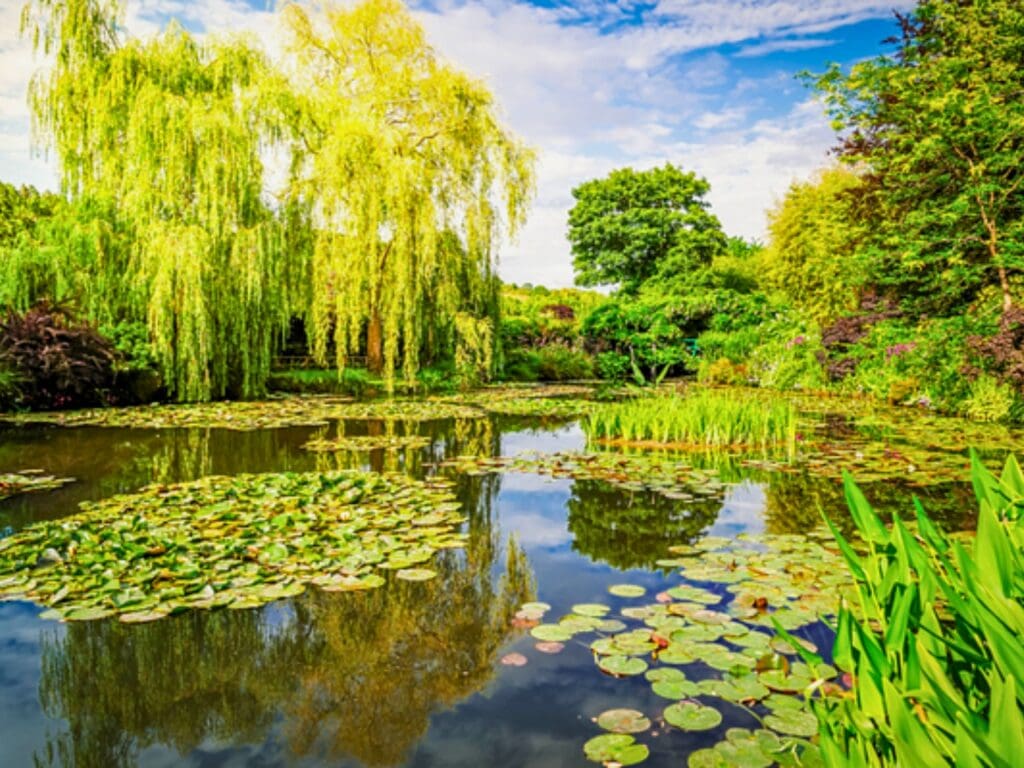
Giverny is one of those places that can easily be mishandled by the wrong pace. Most people know Monet’s gardens from the famous water lilies, the Japanese bridge, and the soft wash of color that has been printed on everything from museum posters to coffee mugs. But Giverny is not just a pretty stop. It is a place built around attention.
Monet did not become Monet because he glanced at a garden once, snapped a mental postcard, and moved on. He studied the same environment over and over, watching light shift across water, petals, trees, and sky. Impressionism was not about perfect outlines. It was about perception, atmosphere, movement, and the way a moment changes while you are standing inside it.
That is why rushing through Giverny feels so off. When travelers arrive frazzled from a road transfer, step into the mid-day crowd flow, take the required bridge photo, and hurry back toward the parking area, they may see the garden, but they do not really enter its rhythm.
On a Seine river cruise, the experience can feel different because the ship docks nearby in Vernon. Instead of treating Giverny like a disconnected errand from Paris, it becomes part of the river’s unfolding. You may have the option to bicycle along the riverbanks, move through the morning air, and arrive with your body awake instead of feeling fried. The garden has a better chance of becoming what it was meant to be: not a backdrop, but a way of seeing.
Rouen Without the Stopwatch
Rouen is the kind of city that rewards wandering, which is exactly why it suffers under rushed travel. It has timber-framed houses, cathedral spires, market squares, medieval lanes, and enough architectural texture to make you slow down without realizing you have done it. This is not a city you want to borrow for a panicked two-hour window while mentally calculating the walk back to the station.
Rouen asks for a slower footstep. It asks you to look up. It asks you to follow a curve in the street because it looks interesting, not because your map told you it was the most efficient route. It asks for the kind of unstructured time that makes travel feel alive.
Arriving by river changes the relationship. When your ship is docked along the quayside, Rouen becomes less of a scheduled stop and more of a place you can actually inhabit for a moment. You can explore the medieval streets, pause for an espresso, linger near the cathedral, browse a market, taste something regional, and return to your stateroom without turning the day into a transportation equation.
That ease matters because it changes your posture toward the city. You are not bracing for the next logistical hurdle. You can let the city take up more space in your attention. And that, to me, is where the Seine Shift becomes real: the river gives you access without making you pay for it in stress.
Normandy with Light, Texture, and Room to Breathe
Normandy is often discussed through the lens of wartime history, and understandably so. The D-Day landing beaches, memorial sites, and American Cemetery carry profound significance. They deserve context, care, and emotional space, not a rushed afternoon wedged between highway time and a tightly managed return to Paris.
But Normandy is also more than one historic chapter. It is countryside, coastline, orchards, cider, cheese, villages, river valleys, and changing light. It is a living region, not a museum label. Reducing it to one long day trip from Paris misses both the emotional weight and the sensory richness of the place.
That is why the river approach works so well for this itinerary. The journey toward Le Havre and the Normandy coast becomes part of the experience instead of a commute you have to survive. You have the opportunity to understand the region in layers: its beauty, its food, its architecture, its pastoral softness, and yes, its history.
When I was in middle school, I had to interview a neighbor who was a war hero in Normandy for a project, and that memory stayed with me. It made history feel human instead of abstract. Not textbook. Not distant. Human. That is the kind of perspective a place like Normandy deserves. You want enough room to listen, absorb, and then return to the river quietly without immediately being thrown back into the machinery of travel.
For this journey, Normandy shouldn’t feel gloomy. It should feel dimensional. Reverent where it should be reverent, beautiful where it is beautiful, and spacious enough for travelers to experience more than a single emotional note.
La Roche-Guyon, Les Andelys, and the Beauty Between the Big Names
One of the quiet gifts of river cruising is that it gives importance to the spaces between the obvious names. Paris may get the headline. Giverny may get the art lovers. Rouen may get the Gothic architecture. Normandy may get the historical weight. But the villages and river bends between them are what make the journey feel like France rather than a list of famous places.
La Roche-Guyon, with its château and dramatic setting along the Seine, offers a different kind of beauty from Paris. Les Andelys and the surrounding river scenery bring that mix of stone, water, hillside, and history that is easy to miss when you are moving by road with your attention split between signs, schedules, and traffic.
This is where the idea of views from the Seine becomes more than a pretty phrase. The view is not just scenery. It is context. It helps you understand why artists were drawn to this region, why towns grew where they did, why the river mattered, and why the movement from Paris toward the coast feels so different when you let it unfold at water level.
That is the art piece of this journey. Not just museums. Not just Monet. The art is in the perspective.
The View from the Seine Is the Whole Point
One of the most underrated parts of river travel is what happens when the view changes slowly. On a bus or in a car, the landscape often becomes something you pass through on the way to the “real” stop. From the river, it becomes part of the experience itself.
The Seine gives France a different rhythm. Stone villages, soft hills, bridges, gardens, working locks, riverbanks, and glimpses of daily life appear gradually, with enough time for your body to register the shift. You are not being flung from one scheduled moment to the next. You are watching the region breathe.
That slower movement matters because this is Impressionist country. The artists drawn to this region were not chasing perfect outlines or polished scenes. They were chasing atmosphere: light on water, color in motion, the feeling of a place before it hardens into a fixed image. From the deck, that starts to make sense in a way no museum label can fully explain.
This is also where the ship becomes your viewing room, your quiet reset, your moving frame. You can join the excursion, read on the sun deck, get a massage, linger over lunch, or simply sit by the glass and let France pass slowly enough to leave an impression. For travelers who are serious about reclaiming your vacation pace , this is where the river starts to make emotional sense.

And yes, the ease matters. On our first river cruise this past March, my husband mentioned how nice it was to watch the scenery instead of having to focus on driving in a new country and reading unfamiliar road signs. That one comment stayed with me because it captured the difference beautifully. The journey itself had become enjoyable, not just the places we were trying to reach.
That is the Seine Shift in practice: not doing less, but experiencing more of what is already there.
When the Goal Is Presence, Not Proof
This kind of journey speaks to the traveler who wants more than a greatest-hits version of France. You still want Paris, of course. You still want the art, the architecture, the food, the gardens, the river towns, and the sense that you are walking through places with real cultural weight. But you also want enough space to enjoy them without turning the trip into a personal endurance challenge.
The thing is this: a trip can be beautifully full without being jammed to the edges like an overpacked carry-on.
You may be the kind of traveler who has already done the overpacked Europe trip and learned from it. You know the difference between a full itinerary and a fulfilling one. You are not trying to prove anything by coming home exhausted, and you do not need every hour of the day filled to feel like your trip was worth the investment.
That is why the Seine Shift resonates. It is not about doing less France. It is about experiencing France with more presence. More context. More ease. More room for the art, the food, the history, the view, and the little unscheduled moments that often become the ones you talk about years later.
That is the kind of trip I had in mind when I chose this sailing for Rose Bloom Travel.

The Rose Bloom Signature Seine Journey
Rose Bloom Travel has secured a premium luxury stateroom block allocation for our signature group journey:
Impressions of the Seine & Paris
August 14 to 21, 2027
Aboard The AmaDante
This seven-day journey is designed for travelers who want Parisian elegance, Impressionist landscapes, Gothic architecture, river villages, regional cuisine, meaningful excursions, and the ease of moving through France without turning the trip into a logistical endurance test.
Aboard AmaDante, the experience is intimate and refined. With only 140 guests, 71 staterooms, and a crew of 45, the ship offers a calmer, more personal environment than high-occupancy cruising, while still giving you the comfort, dining, service, and structure that make the journey feel seamless.
Optional pre- and post-cruise land packages are available for travelers who want to extend their time in France while keeping the full itinerary cohesive and supported.
If you are ready to step away from checklist travel and into a more intentional way of seeing France, explore our itinerary and request your stateroom allocation.
France does not need to be rushed.
And neither do you.
Frequently Asked Questions About Seine River Cruises
What is the best month for a Seine river cruise?
The best month for a Seine river cruise depends on what you want from the trip. Spring and early summer are beautiful for gardens and longer daylight, while late summer and early fall can bring warm river views, outdoor cafés, and that softer seasonal rhythm that makes France feel especially inviting.
Rose Bloom Travel’s Impressions of the Seine & Paris journey sails August 14 to 21, 2027, giving travelers a warm-weather window for Paris, Giverny, Rouen, Normandy, and the landscapes along the Seine.
Do Seine river cruises go all the way to the Normandy landing beaches?
No, Seine river ships do not sail directly onto the beaches themselves. The ship travels along the Seine through Northern France, and excursions may take guests by coach from the ship to key Normandy sites, depending on the itinerary.
The distinction matters because you are not attempting Normandy as a rushed, there-and-back sprint from Paris. A river itinerary gives the region more context, better pacing, and a more comfortable framework for a meaningful day.
Is a Seine river cruise good for people who want to explore Paris deeply?
Yes, but it depends on how much dedicated Paris time you want. A Seine river cruise is not the same as spending an entire week based in Paris. It treats Paris as the beginning of a broader French story, then carries the journey into Giverny, Rouen, La Roche-Guyon, Le Havre, Normandy, and the countryside along the Seine.
For travelers who want several full days focused only on Paris, a pre- or post-cruise land package can be a smart addition. That way, Paris gets room to breathe without forcing the river portion to do all the work.
Is a Seine river cruise better than taking trains through France?
It depends on your travel style. Train travel can be efficient and enjoyable for independent travelers who like managing schedules, luggage, station navigation, hotel changes, and timing on their own.
A Seine river cruise is a better fit for travelers who want a smoother framework. You still experience multiple destinations, but your stateroom moves with you, the itinerary has a natural flow, and the logistics are not sitting in your lap every morning.
Why is river cruising a good fit for slow luxury travel?
River cruising works beautifully for slow luxury because it combines cultural access with ease. You can experience multiple towns and regions without constantly packing, transferring, reorienting, and rebuilding the day from scratch.
The pace leaves more room for presence: a garden visit, a long lunch, a regional wine pairing, a quiet view from the deck, or an afternoon where the most important thing you do is notice the light on the water. For a deeper look at choosing the right cruise style, our article on what to know before you book a luxury cruise is a helpful next read.
Who should consider Rose Bloom Travel’s Seine river cruise?
This journey is best for adults who want France to feel refined, culturally rich, and thoughtfully paced. It is especially well suited for travelers who value art, history, food, gardens, architecture, personal space, and the ease of having the major logistics handled.
It is a strong fit for busy professionals, couples, small friend groups, and experienced travelers who want Paris and Normandy without turning the trip into a checklist.
Who should probably skip this style of trip?
This is probably not the best fit for travelers looking for the cheapest possible cruise fare, a fast-paced multi-country itinerary, party-ship energy, or constant onboard entertainment.
It may also not be ideal for travelers who genuinely love DIY travel planning and prefer to personally manage every hotel, train, transfer, meal, and tour.
Why book a Seine river cruise through Rose Bloom Travel?
Anyone can book a cruise cabin online, but not every cabin, itinerary flow, or land extension is the right fit for every traveler. Rose Bloom Travel helps match your travel style to the right cruise experience, stateroom category, cabin placement, pre- or post-cruise options, and overall trip rhythm.
That kind of intentional cruise curation helps protect your time, your energy, and your investment. The goal is not just to get you to France. The goal is to help you experience France in a way that feels aligned, beautiful, and deeply worth it.


Be the first to comment